From October 8, 2026, to February 21, 2027, Pirelli HangarBicocca will present "Abitare lo spazio. Inhabiting Space," the first museum retrospective dedicated to Luciano Fabro in Italy since the artist’s death in nearly two decades. The exhibition delves into the concept of "habitat"—the cornerstone of his perceptual and spatial research through an extensive presentation that brings together around fifty of the artist's most significant sculptures and installations, tracing the entirety of the artist’s career.
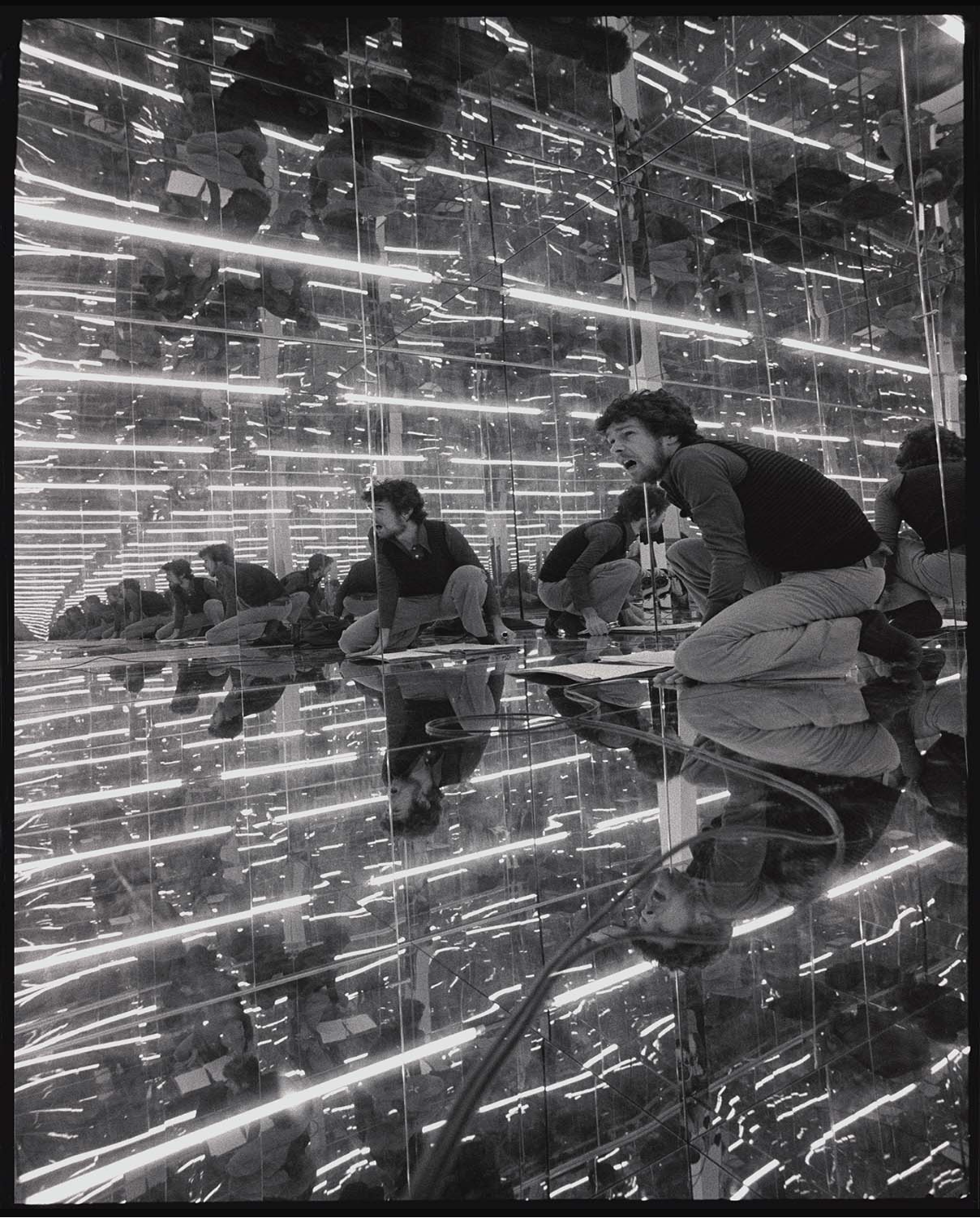
A central figure in postwar Italian art, Luciano Fabro (Turin, 1936–Milan, 2007) was a leading member of the Arte Povera movement, while constantly maintaining an independent and nonconformist approach to artistic research. From the beginning of his career, he developed a distinctive approach to the notion of inhabiting space, conceived by the artist as a dynamic field of action, whilst examining the act of looking, the experience, and the relationship between the viewer, the artworks and the surrounding environment. Informed by Lucio Fontana’s Ambienti Spaziali (1899–1968) and by the conceptual inquiries of Piero Manzoni (1933–1963), Fabro focused into the linguistic aspects of sculpture, treating it as an essential tool for interpreting the forms of experience and redefining the relationship between the sculptural element and the surrounding space. He experimented extensively with the expressive potential of a wide range of materials, ranging from more traditional media such as marble, glass, and bronze to less conventional ones, such as silk and lead, each chosen for its sensory and evocative qualities. Influenced by a renewed interest in the Baroque aesthetics, Fabro’s works employ reflective surfaces, glass, and mirrors to fragment and multiply the surrounding space, intensifying the interplay of contrasts and the relationship between presence and absence, the visible and the invisible. Working at the intersection of sculpture, painting, and architecture, Fabro highlights their mutual cross-contamination, using seemingly simple forms to generate complex meanings. Defining painting as "vision" and sculpture as "revelation", he developed an open, layered body of work in which materials and languages intertwine in an exploration that is simultaneously reflective, sensual, rigorous, and dynamic.
Alongside his artistic work, Fabro developed a rigorous theoretical approach, making significant contributions to art theory. Grounded in meticulous conceptual reflection, his research leaves behind a substantial body of writings. At the core of his thinking lies a constant tension between the autonomous nature of the work of art —understood as a complete form and a principle of order— and the realm of sensory experience, through which gives the artwork acquires meaning in its encounter with the real world. Fabro’s sculptures and installations thus emerge as points of equilibrium between these two poles, where conceptual rigor and perception, formal autonomy and relationality coexist in a state of continuous openness. This strong intellectual foundation nourished the creation of imaginative and multilayered works, often characterized by a subtle sense of irony, that expanded and redefined the possibilities of contemporary sculpture. More than a decade since his last major international exhibition, held at the Reina Sofía Museum in Madrid in 2014, the Pirelli HangarBicocca retrospective offers an opportunity to reflect on Fabro's profound connection to the city of Milan. Having moved there in 1959, after spending his childhood in Friuli, the artist found in the city’s vibrant cultural scene a fertile environment for the development of his artistic practice. Between the late 1970s and the early 1980s, together with artist Hidetoshi Nagasawa (1940–2018) and critic Jole De Sanna (1947–2004), he founded Casa degli Artisti, a center intended to foster dialogue and experimentation among generations of younger artists. From 1983 to 2002, Fabro also taught at the Brera Academy of Fine Arts, inspiring numerous artists of his time as much as subsequent generations.
Titled, “Abitare lo spazio. Inhabiting Space”, the exhibition is the first museum retrospective dedicated to Fabro in Italy since his death in 2007. Curated by Fiammetta Griccioli, Roberta Tenconi, and Vicente Todolí in collaboration with Silvia Fabro of the Luciano and Carla Fabro Archive, the exhibition at Pirelli HangarBicocca brings together around fifty of the artist's most significant sculptures and installations. It examines the artist’s conceptual and formal approach to space, exploring the ways it engages with the perception of those who inhabit it. Emphasis is placed on Fabro’s investigations into perception and spatial experience, initiated in the 1960s, tracing their development from his early experiments with mirroring surfaces through the following fifty years. This evolution culminated in increasingly complex architectural structures and spaces—often made of paper—which the artist referred to as "habitats": ideal environment, either autonomous/self-contained or integrated into existing spaces, conceived to house and activate his works.
The notion of habitat runs throughout Fabro’s practice from the 1960s onwards, although the artist only began using the term in the 1980s. For Fabro, a habitat combines materiality and artisanal elements with theoretical and philosophical depth. The concept draws on its dual etymological roots: the Latin verb habito, meaning to inhabit or to dwell, and the noun habitus, referring to outward appearance, bodily form, or clothing. Within this framework, the habitat becomes a space to be traversed and inhabited, as well as a device that shapes perception and fosters relationships. By bringing together sculpture, architecture, and painting, Fabro constructs pathways, perspectives, and architectural elements that reconfigure the perception of space. Conceived as both interventions within existing exhibition spaces and autonomous environments, the habitats challenge the neutrality of the white cube by using ephemeral materials such as paper and light, to define new spatial configurations and to accommodate other works by the artist. In many respects, these environments evoke the welcoming atmosphere of the Baroque piazza while resonating with the context of radical and relational urbanism developed between the 1960s and 1970s. Hence, the artwork is not merely observed but also experienced and inhabited within a dynamic system in which space, body, and perception influence one another. Fabro defined the habitat as a topos, a constructed place capable of generating logos— meaning, relationships, and community. In the artist’s own words, “Therefore, it’s clear that installations don’t interest me: they create a fake construction in a fake situation. The Habitat, on the other hand, is not fake. It is quite real: the light is real, a wall is a wall. It is not mimesis; it belongs to a situation in which one is present; it assumes one is there. If not, it’s not a Habitat”.
The exhibition path in Pirelli HangarBicocca alternates individual works with large-scale environmental installations that comprise multiple pieces, conceived as parts of a single spatial dispositive, alongside a number of habitats reconstructed in the Navate following the artist’s death, on the basis of his original plans and instructions.
The Artist
Among Luciano Fabro's major solo exhibitions are: Museo Nacional Centro de Arte Reina Sofía, Madrid (2014); Kunstmuseum Winterthur; GAMeC - Galleria d’Arte Moderna e Contemporanea, Bergamo (2013); Madre - Museo d’Arte Contemporanea Donnaregina, Naples (2007, 2004); Musée Bourdelle, Paris (2004); Tate Gallery, London (1997); Centro de Arte Hélio Oiticica, Rio de Janeiro (1997); Centre Pompidou, Paris (1996); Portikus, Frankfurt am Main (1996); San Francisco Museum of Modern Art (1992); Kunstmuseum Luzern, Lucerne (1991); Fundació Joan Miró, Barcelona (1990); Capodimonte National Museum, Naples; Castello di Rivoli Museum of Contemporary Art, Rivoli-Turin (1989); Palais des Beaux-Arts, Brussels (1988); Musée d’Art Moderne de la Ville de Paris (1987); Neue Galerie – Sammlung Ludwig, Aachen, Germany (1983); Museum Boijmans Van Beuningen, Rotterdam (1981); PAC Padiglione d’Arte Contemporanea, Milan (1980).
His work has also been featured in biennials and international exhibitions, including the Sydney Biennale (2018, 1988); the Rome Art Quadriennale (2008, 1973); the Venice Biennale (1997, 1993, 1986, 1984, 1980, 1978, 1975, 1972); São Paulo Biennial (1996, 1975); documenta, Kassel (1992, 1982, 1972); Paris Biennale (1985, 1971); Tokyo Biennale (1970).
Fabro received numerous prestigious awards, including the Accademico d’Onore, Florence (2004); the Coutts Contemporary Art Award, Zurich (1994); the Antonio Feltrinelli Prize, Rome (1993); the Sikkens Prize, Rotterdam (1987); the Art Prize, Aachen (1983).
Catalog
Published to accompany the retrospective, this volume offers an in-depth exploration of Luciano Fabro’s artistic practice through a series of essays examining significant moments, key works, and central themes that shaped his research. These range from the pivotal year of 1968, which marked a turning point in his practice, to his engagement with the Baroque and its various manifestations, from the representation of the female figure to cosmological themes, while also focusing on emblematic projects such as Allestimento teatrale. Cubo di specchi and the Habitat created for his 1981 retrospective at Museum Boijmans Van Beuningen in Rotterdam. Commissioned for this publication, the texts are authored by leading international art historians, curators, and scholars, including Stefano Chiodi, Catherine Grenier, Sharon Hecker, Frances Morris, Iolanda Ratti, Margit Rowell, Francesco Stocchi, and Andrea Viliani.
The publication also features Martin Schwander’s newly contextualized reading of his 1991 interview with Fabro; the artist’s 1983 conversation with Bruno Corà—a seminal text for the formulation and theorization of the concept of Habitat; and an extensive essay by Rudi Fuchs on sculptural practice in public space.
The monograph is further enriched by a chronology tracing the development of Fabro’s work from its earliest stages, accompanied by a selection of previously unpublished archival images curated by Teodora di Robilant and Silvia Fabro, who has also contributed detailed entries for the works included in the exhibition. The volume concludes with an introduction to the exhibition project by Vicente Todolí and an essay by Fiammetta Griccioli and Roberta Tenconi exploring the evolution of Fabro’s spatial research and the development of the concept of Habitat. Extensive photographic documentation of the installation at Pirelli HangarBicocca, together with historical and iconographic materials, complete the publication.
Pirelli HangarBicocca
Pirelli HangarBicocca is a nonprofit foundation dedicated to the production and promotion of contemporary art, established and supported by Pirelli. Founded in 2004, Pirelli HangarBicocca is now a leading institution for the international art community, the public, and the local area. As a museum that is completely free, accessible, and open to the public, it is a space for experimentation, research, and outreach where art serves as a catalyst for reflection on the most pressing issues in contemporary culture and society. Its activities, aimed at a broad and diverse audience, include a calendar of major solo exhibitions by Italian and international artists, a multidisciplinary program of collateral and in-depth events, scholarly and popular publishing initiatives, and educational and training programs. The dialogue between the public and art is further fostered by the constant presence of museum docents in the exhibition spaces. Since 2012, Vicente Todolí has served as artistic director. Housed in a former industrial building—once the site of a locomotive manufacturing plant—Pirelli HangarBicocca covers an area of 15,000 square meters and is one of the largest horizontally oriented exhibition spaces in Europe. The exhibition area includes the Shed and Navate spaces, dedicated to hosting temporary exhibitions, and Anselm Kiefer’s permanent work, *I Sette Palazzi Celesti 2004–2015*, a monumental installation consisting of seven reinforced concrete towers that has become one of the most iconic works in the city of Milan.
Media Relations
Head of Press and Communications
Angiola Maria Gili
T +39 02 6442 31229
angiola.gili@hangarbicocca.org
Press Office and Social Media
Sofia Baronchelli
T +39 334 658 9918
sofia.baronchelli@hangarbicocca.org
press@hangarbicocca.org
International Media Relations, Sutton PR
Khuroum Bukhari
khuroum@suttoncomms.com
Dana Chan
dana@suttoncomms.com
To download images
https://pirellihangarbicocca.org/area-riservata/
Username: fabro
Password: pirellihangarbicocca
Exhibition Information
Organization |
Pirelli HangarBicocca |
Artist |
Luciano Fabro |
Title |
“Abitare lo spazio. Inhabiting Space” |
Curated by |
Fiammetta Griccioli, Roberta Tenconi, and Vicente Todolí, in collaboration with Silvia Fabro (Archivio Luciano e Carla Fabro) |
Organized by |
Pirelli HangarBicocca |
Press Preview |
October 6, 2026 |
Opening |
October 7, 2026 |
Exhibition Dates |
October 8, 2026 – February 21, 2027 |
Location |
Via Chiese 2, Milano |
Opening Hours |
Thursday, Friday, Saturday, and Sunday
10.30 AM – 8.30 PM |
Admission |
Free |
Catalog |
Marsilio Arte |
Workshop |
Information on creative workshops: https://pirellihangarbicocca.org/kids/ |
Info |
+39 02 6611 1573 info@hangarbicocca.org |



Commenti
Posta un commento